Relay
All-in-one HR and operations management. Relay centralizes invoices, contracts, timesheets, projects, tasks, staff, and time off in a single platform.
Visit the site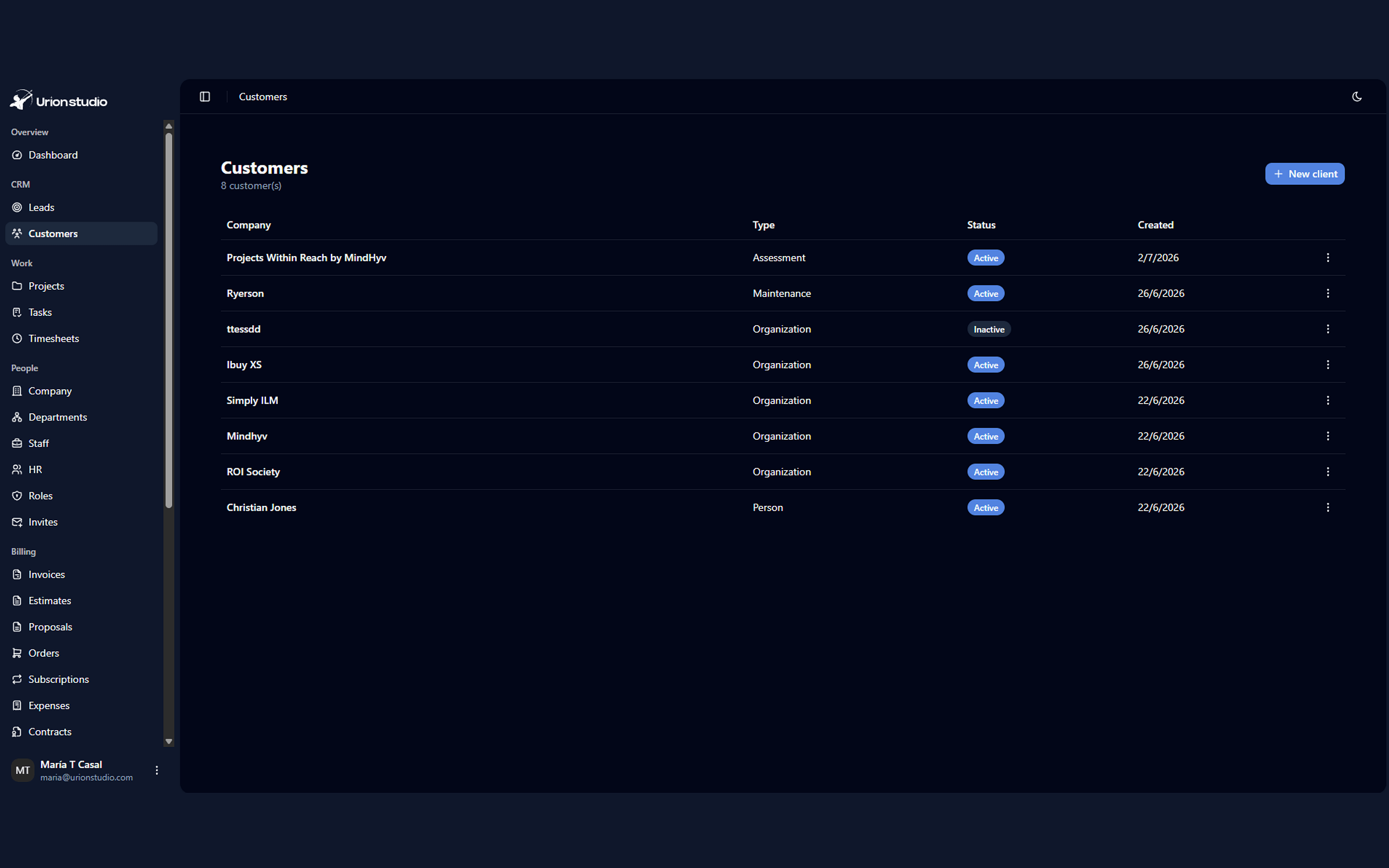
Relay brings HR and business operations into a single platform, replacing the spreadsheets, disconnected tools, and email threads that most growing teams run on by default.
The Challenge
As a company grows, its administrative surface area grows with it: invoices, contracts, timesheets, project tracking, task management, staff records, and time-off requests all end up living in different tools, spreadsheets, or inboxes, owned by different people. Nothing talks to anything else, so answering a simple question — like whether a project is on budget once contractor hours and time off are accounted for — means pulling data from three or four places by hand. Teams needed one system covering the full operational surface instead of another point solution for a single piece of it.
What We Built
A unified operations platform covering the full range of day-to-day administrative work:
- Invoicing and contracts — manage billing and agreements from one place, tied to the projects and clients they belong to
- Timesheets — track hours against projects and tasks, with visibility into where time is actually going
- Project and task management — plan and track work at both the project level and the individual task level
- Staff management — a central record of personnel, roles, and staffing across projects
- Time off tracking — manage vacation and leave requests as part of the same system that tracks staffing and project capacity
- Cross-linked data — invoices, timesheets, projects, and staff all reference each other, so operational questions don’t require manually reconciling separate tools
Technical Approach
Relay is built as a full-stack web application with a shared data model connecting its core entities — staff, projects, tasks, timesheets, invoices, and time off — so that a single action, like logging hours against a task, updates project progress and feeds directly into invoicing without manual re-entry. Access is role-based, so staff, project managers, and administrators see the views and permissions relevant to their role rather than a single undifferentiated interface.
Because every module reads from the same underlying records, reporting doesn’t require exporting data from separate tools and reconciling it manually — a project’s status already reflects logged time, staffing, and outstanding invoices.
Architecture Decisions
We chose to model the whole operational surface as one connected system rather than building or integrating separate point tools for invoicing, timesheets, and project tracking. That decision trades some of the flexibility of best-in-class standalone tools for consistency: staffing, time, and billing data can never drift out of sync with each other because they’re the same records, not synced copies.
Role-based access was built in from the start rather than added later, since a system covering invoices, contracts, and staff records needs clear boundaries on who can see and edit what from day one.
Results
Relay replaces a patchwork of spreadsheets and disconnected tools with a single operational system, giving teams of any size a clear, current view of projects, staffing, time, and billing without manually reconciling data across separate tools. Administrative work that used to require pulling from multiple sources now lives in one place.